Designing Government Systems at BPDLH
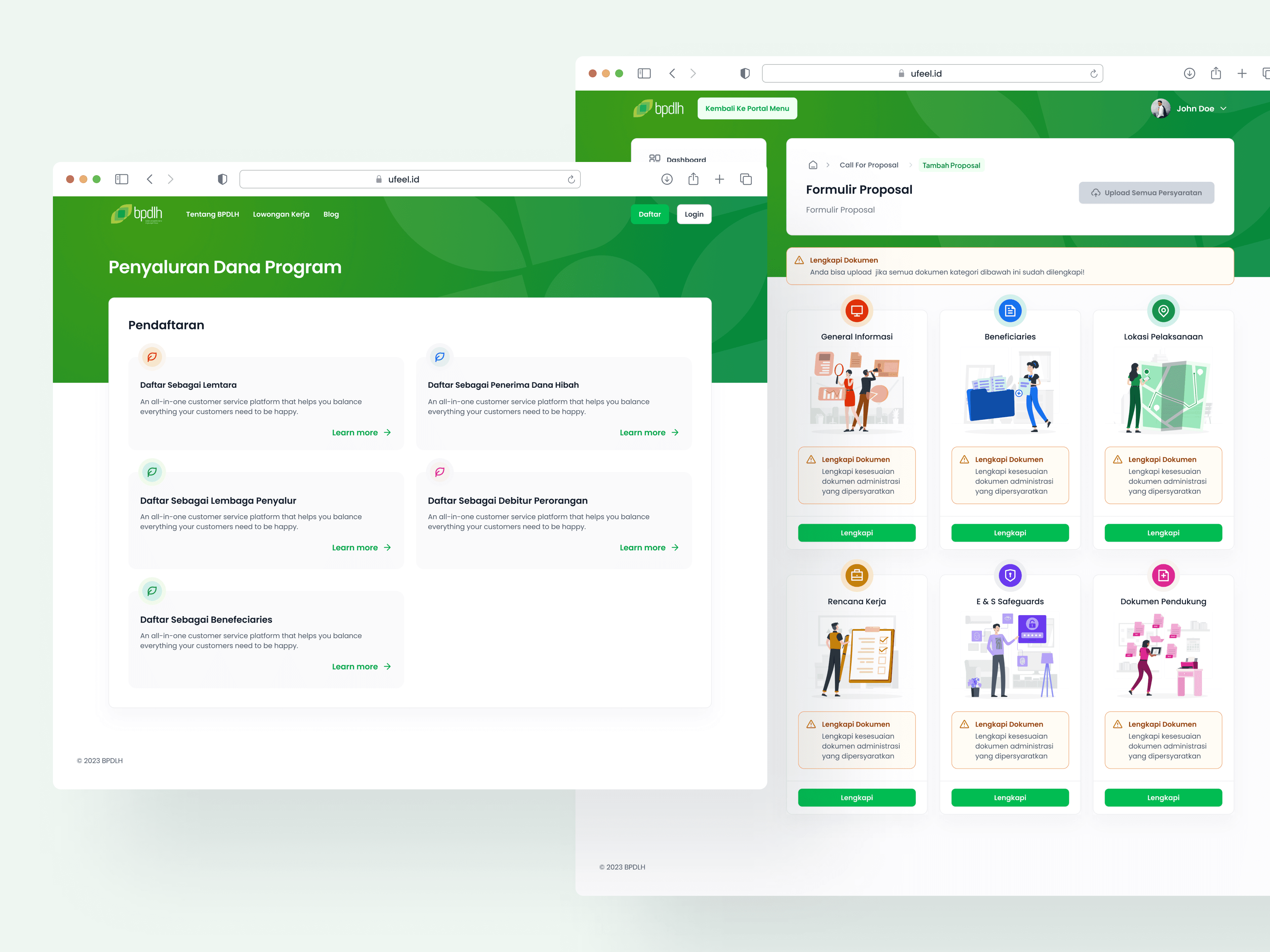
Designing an integrated information and project management platform used by all divisions within BPDLH. The platform consolidates complex, interconnected business processes including funding applications, monitoring & evaluation, procurement, audit, and accounting into a single digital ecosystem.
OVERVIEW
Role & Responsibility
UI/UX Designer - User Research, Interaction Design, Visual design, Prototyping & Testing
Project Type
B2B (Business to Business)
Timeline
August 2022 - June 2023
Platform
Mobile Apps
This BPDLH project is a large-scale digital transformation initiative aimed at addressing major operational challenges caused by fragmented, paper-based processes across multiple divisions. The case study outlines how an integrated digital platform was designed to replace manual systems, connect more than 20 business modules, and enable seamless, traceable workflows for both internal stakeholders and external users such as donors and funding applicants.
ABOUT COMPANY
BPDLH is a public service agency under the Indonesian Ministry of Finance responsible for managing and distributing environmental funds. Its role includes handling grants, program funding, and partnerships with national and international donors to support sustainable environmental initiatives.
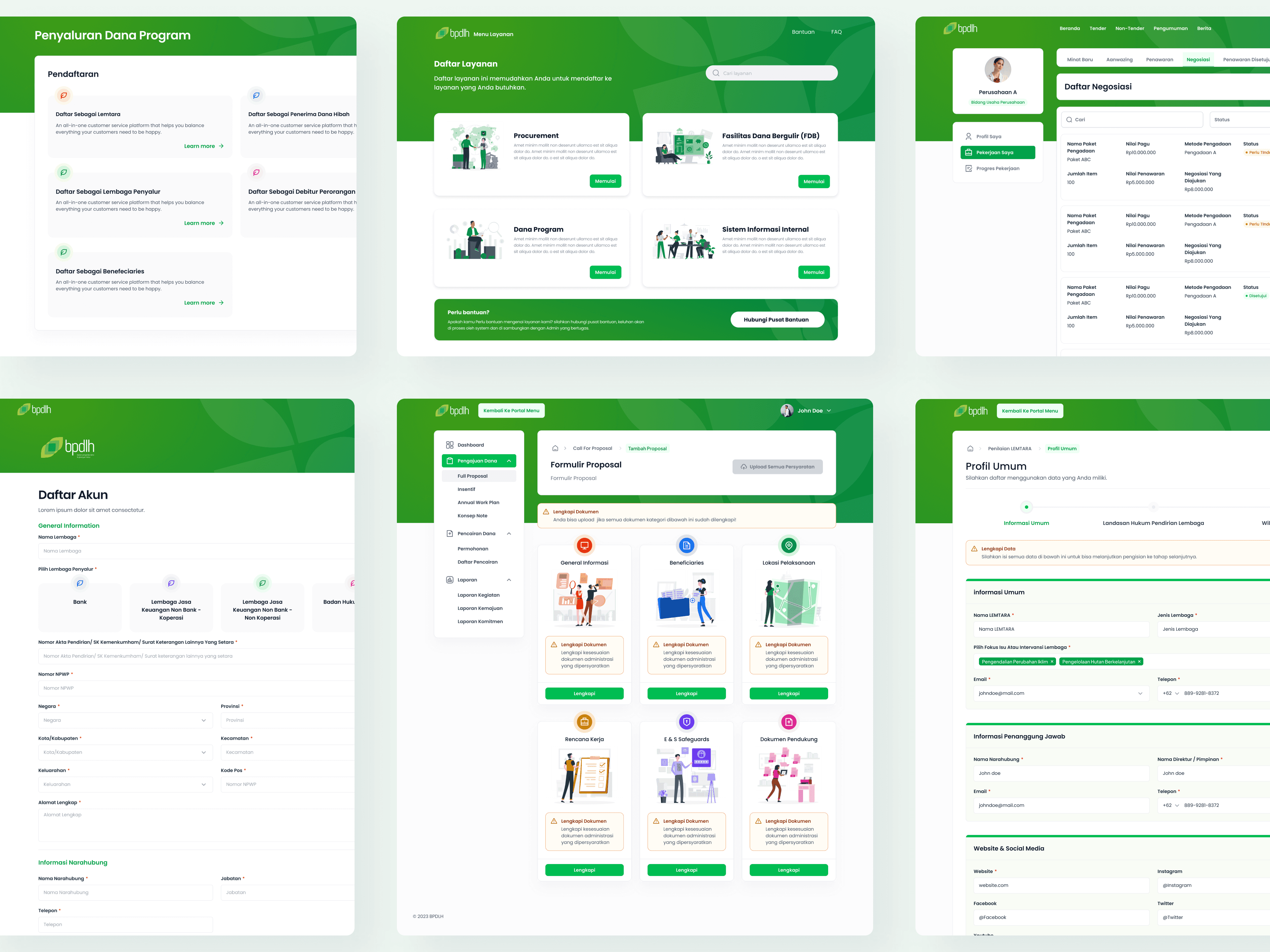
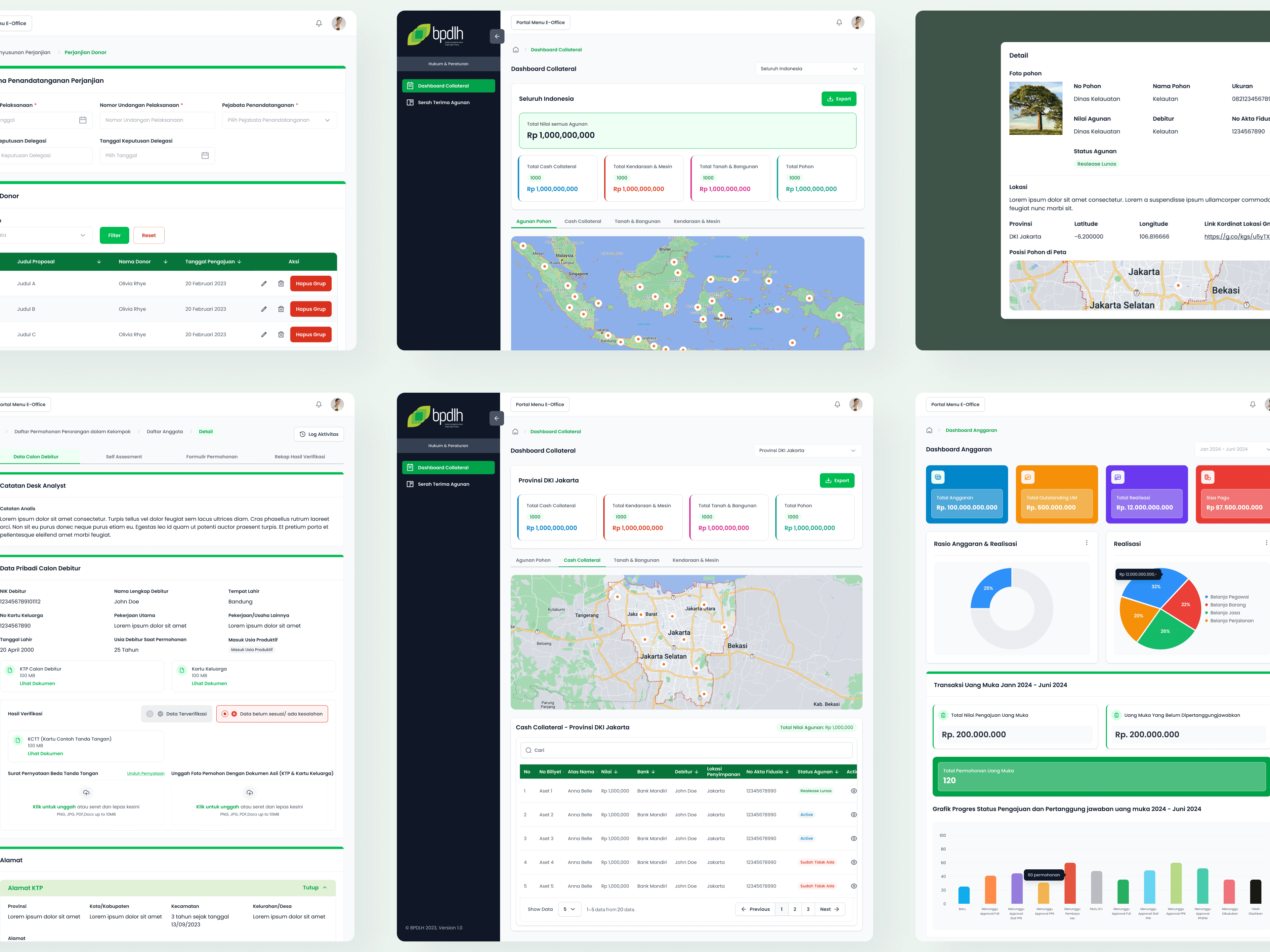
FINAL DESIGN
PROJECT GOALS
Transforming Paper-Based Operations into a Unified Digital System
How might we design a unified digital platform that seamlessly connects all BPDLH business processes across divisions, while reducing manual work and improving transparency for both internal and external users?
COMPETITIVE ANALYSIS + THE GAP
Market Learnings & Opportunities for Government Enterprise BPDLH
Because BPDLH’s operational context is highly specific, there were no direct competitors offering an identical solution. Instead, the competitive analysis focused on comparable enterprise and government platforms that manage funds, grants, or large-scale programs.
These platforms were evaluated based on workflow maturity, usability, transparency, and their ability to support multi-role users within regulated environments.
Opportunity/What could be improved
Government-wide digital transformation initiatives
Process standardization across divisions
Modular system architecture for scalability
Progressive disclosure to manage complexity
Clear dashboards and status visibility across all modules
USER INTERVIEW
Analysis of User Interview Results
To gain a deeper understanding of user behavior within the market, and due to limited timeline and budget, the research was conducted through merchant partners.
Key Insight: After collecting the survey results, I listed 3 key findings. Here's what was decided after discussing the survey results
Document Management
Manual proposal revisions caused reprinting, version confusion among reviewers, and forced external applicants to resubmit physical documents, leading to delays and inefficiency.
Cross-Division Coordination
Staff had to re-enter the same data across different systems, relied on emails or WhatsApp for cross-division coordination, and lacked visibility into the current status of proposals.
Tracking & Transparency
The absence of automated status tracking and notifications forced staff to check progress manually, triggered frequent status inquiries from applicants, and left users unclear about timelines and bottlenecks.
IDEATION
Collect Insight & Brainstorming
During an hour long "brainjam" session with the Product Manager. We identified three main focus areas to be implemented in this project.
Digital Proposal Workflow & Version Control
Replace manual document circulation with a centralized digital proposal workflow that supports version control, collaborative reviews, and online submissions, reducing revision time, version confusion, and the need for physical document handling.
Unified Cross-Division Workflow & Data Management
Create a centralized system that enables single data entry, shared workflows across divisions, and real-time status visibility, reducing duplication, miscommunication, and uncertainty in proposal processing.
Transparent Status Tracking & Automated Notifications
Introduce real-time proposal tracking with automated task and approval notifications, giving applicants clear visibility into progress while reducing manual status checks and follow-ups for internal teams.