Designing an AI-Driven EMDR Mobile Therapy App
Designing a mobile mental health application to support users in processing trauma using EMDR (Eye Movement Desensitization and Reprocessing) Therapy.
OVERVIEW
Role & Responsibility
UI/UX Designer - User Research, Wireframing, Interaction Design, Visual Design, Prototyping & Testing
Project Type
B2C, AI Powered App
Timeline
March 2025 - May 2025
Platform
Mobile Apps
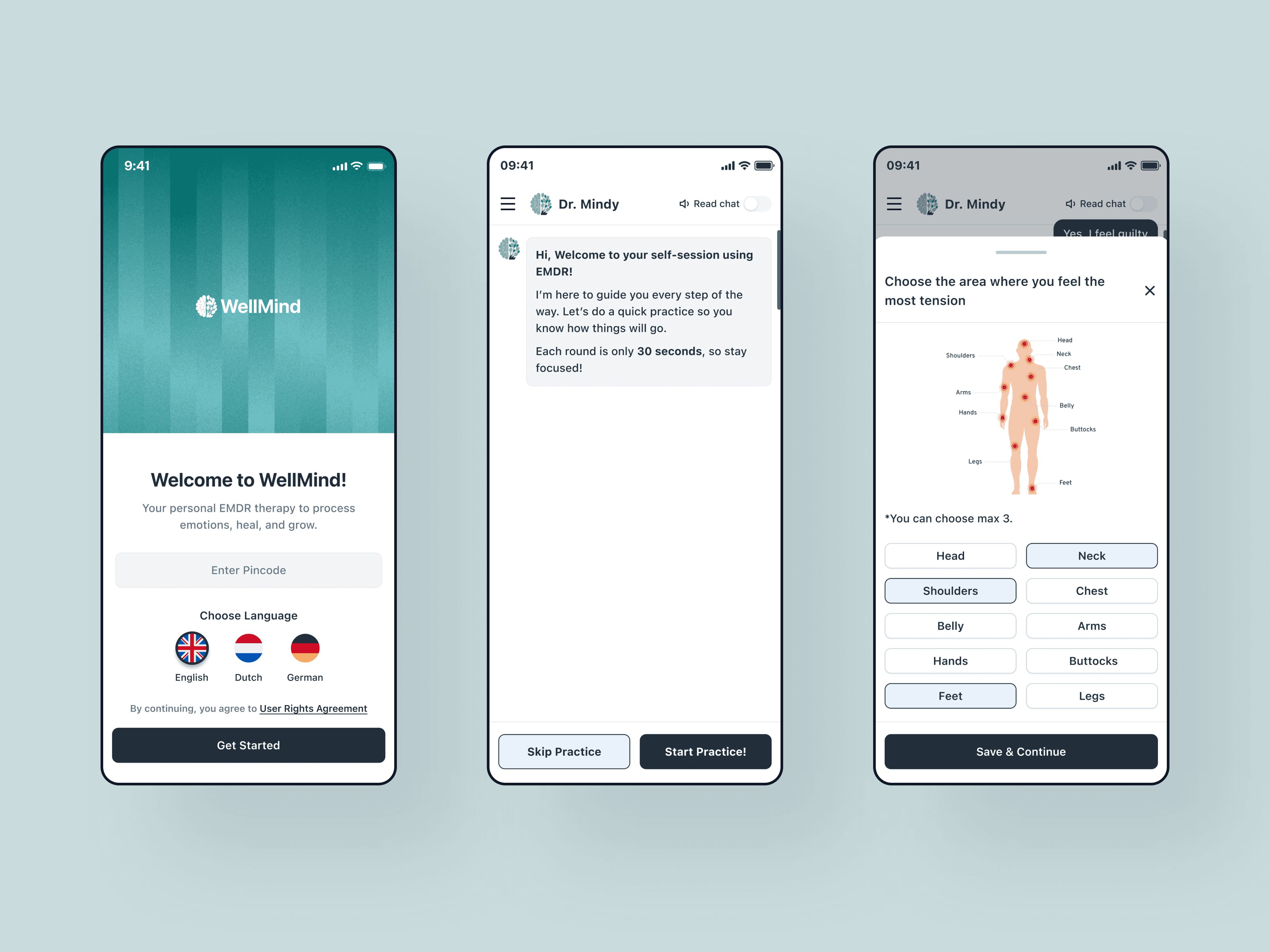
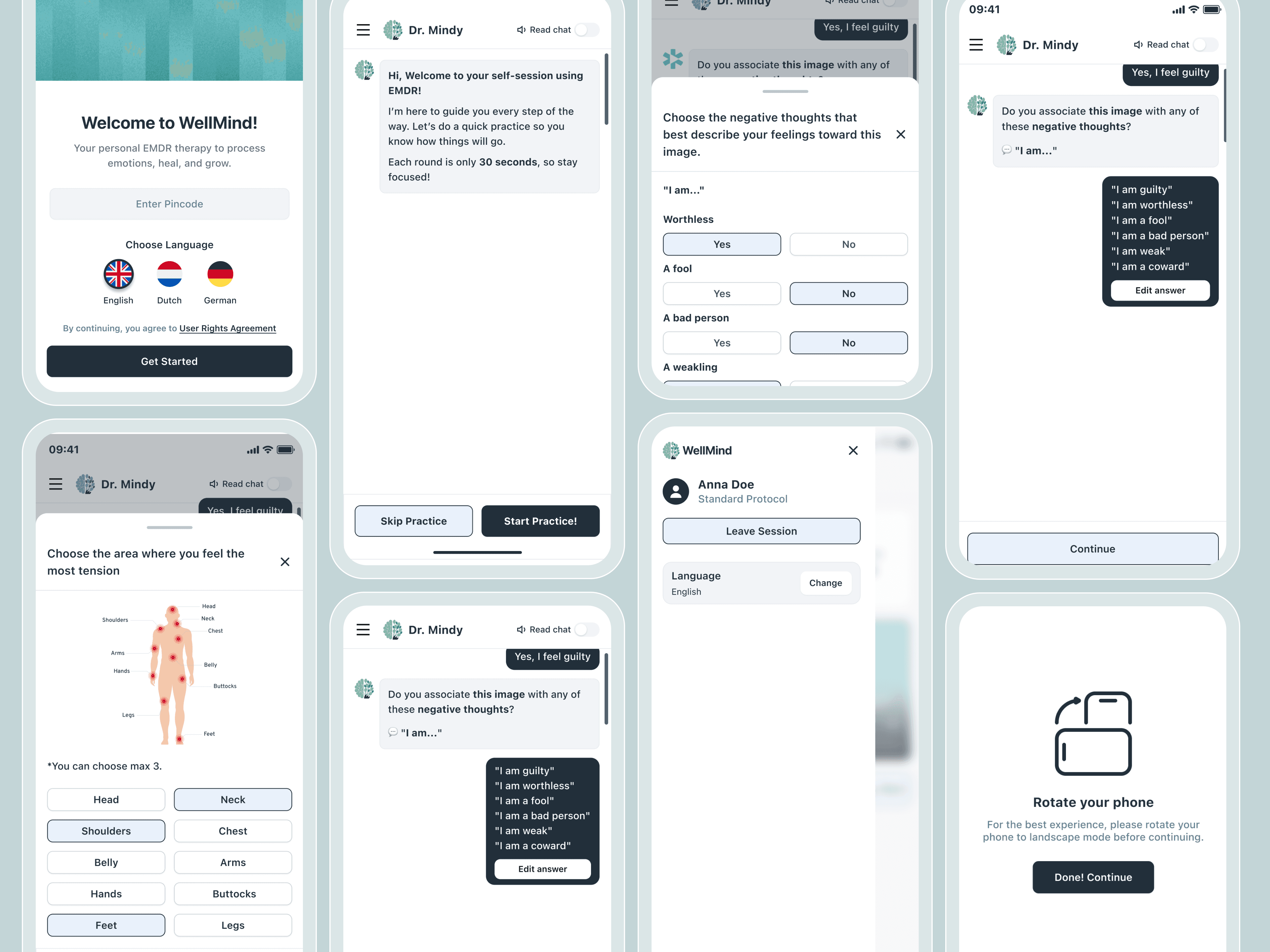
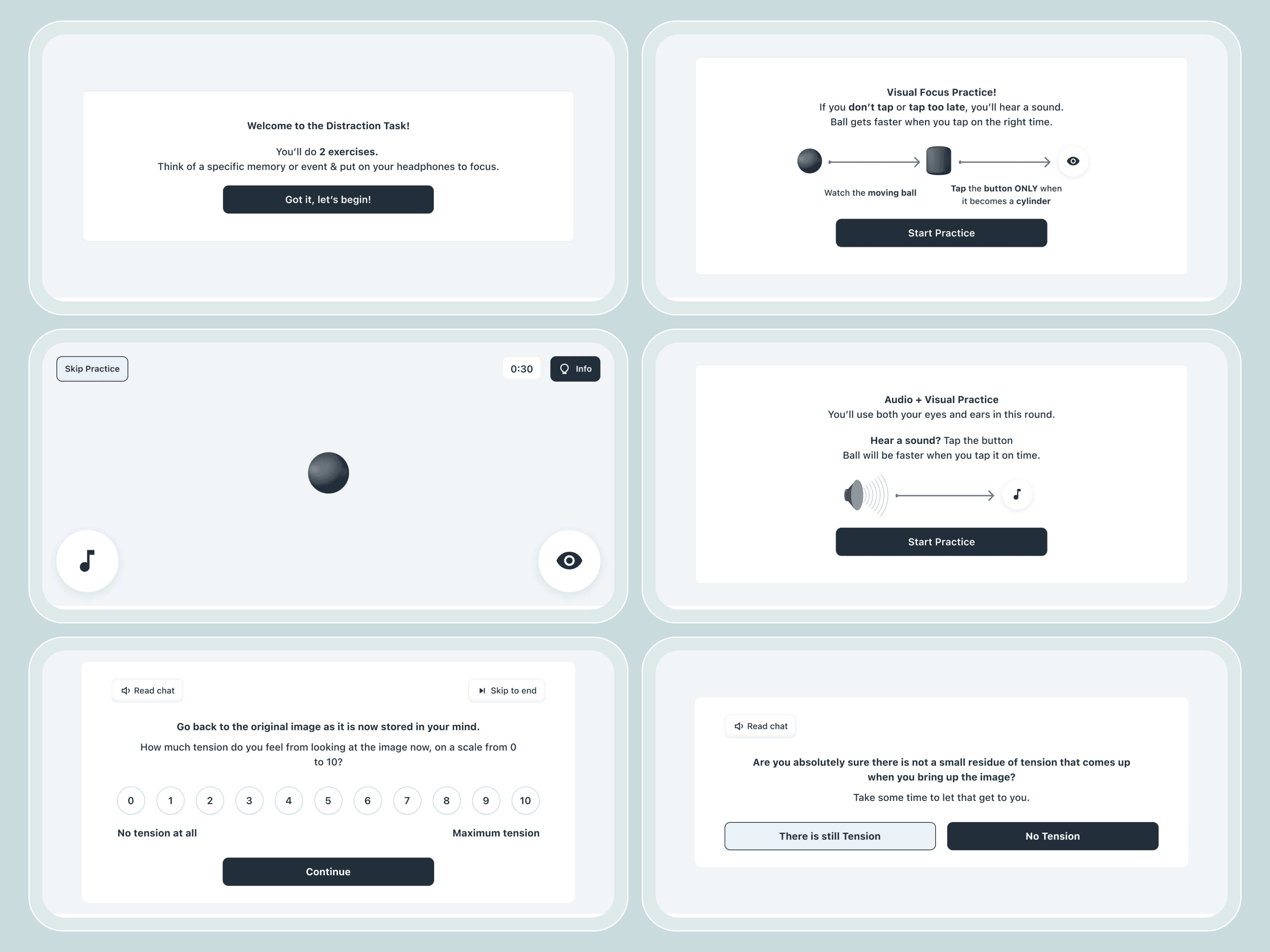
AI-Driven EMDR Mobile Therapy app is a end-to-end revamp of EMDR-based mental health application, transforming the legacy version into a modern AI chatbot–driven mobile experience. The project focuses on improving usability, simplifying the EMDR therapy flow, and enhancing users’ sense of emotional safety, focus, and guidance—especially for individuals with PTSD.
ABOUT COMPANY
The client for this project is a digital mental health company based in the Netherlands, focused on building technology-driven solutions to support emotional well-being.
FINAL DESIGN
PROJECT GOALS
Designing a Supportive and Effective EMDR Therapy Experience
How might we design an AI-driven EMDR experience that feels guided, emotionally safe, and supportive, while keeping the therapy flow simple and non-overwhelming for users with PTSD?
COMPETITIVE ANALYSIS + THE GAP
Market Learnings & Opportunities for EMDR Mobile Therapy App
To understand industry standards and identify opportunities, we conducted a competitive analysis of three major platforms: WYSA, WoeBot, BetterHelp.
Opportunity/What could be improved
Growing global demand for digital trauma therapy solutions
Clear differentiation through AI + EMDR positioning
Combine empathetic AI conversation with structured visual EMDR guidance
Gradually educate users about EMDR through progressive disclosure
USER INTERVIEW
Analysis of User Interview Results
To gain a deeper understanding of user behavior, and due to limited time and budget, research was conducted through interviews with 8 existing users and 2 therapists.
Key Insight: After collecting the survey results, I listed 3 key findings. Here's what was decided after discussing the survey results
Navigation & Flow Confusion
Users struggled to navigate between stages due to unclear progression, excessive screens, and overly technical menus that felt intimidating rather than supportive.
Lack of Emotional Support
The experience felt cold and administrative, offering little empathy or reassurance during emotionally intense moments when users needed guidance and validation.
EMDR Practice Confusion
Users were confused about when and how to interact, felt stressed by rapid visual movement, and lacked understanding of the exercise’s purpose.
IDEATION
Collect Insight & Brainstorming
We identified three main focus areas to be implemented in this project.
Empathetic AI chatbot with therapeutic tone
An AI chatbot designed with a warm, therapeutic tone to provide emotional reassurance, guide users through each stage, and support them during sensitive therapy moments.
Progressive disclosure of EMDR stages
EMDR stages are introduced step by step to reduce cognitive load, clarify progress, and help users stay focused without feeling overwhelmed.
Simplified and adaptive EMDR visual elements
Visual elements are simplified and adaptive to user pace, helping maintain focus, reduce stress, and create a calmer, more supportive therapy experience.